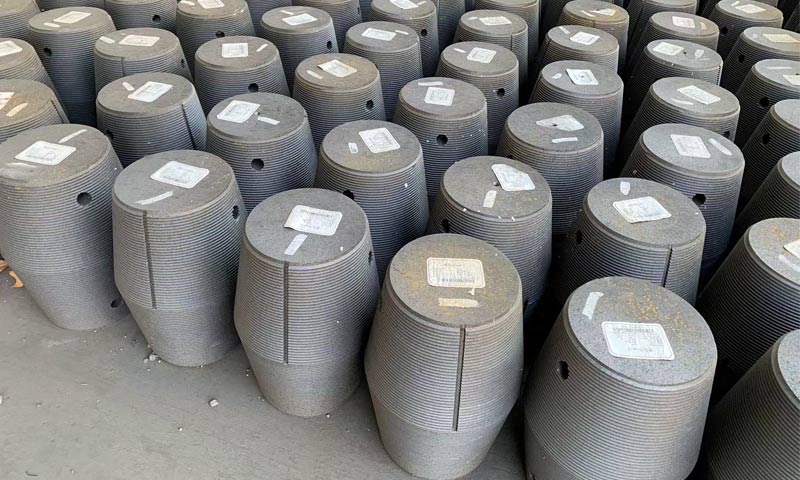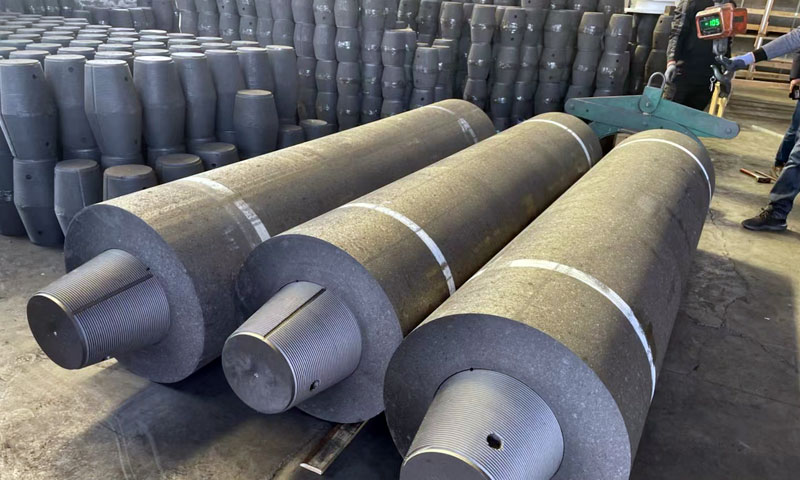
No electric arc furnace operator ever wants to see an graphite electrode fracture. What comes to mind when an electrode fractures? The electrode joint is where the majority, say seven or eight out of ten breaks, happen. Although the cost contribution to the overall electrode is negligible, and the proportion of each may be small, an electrode fracture will mean one electrode assembly being discarded and losing all work in process in one entire furnace of steel.
Procuring an electrode graphite nipple may seem as easy as stating specifications and pricing, but in reality the engineering considerations within it are greater than imagined.
Electrode Graphite Nipple Working Condition
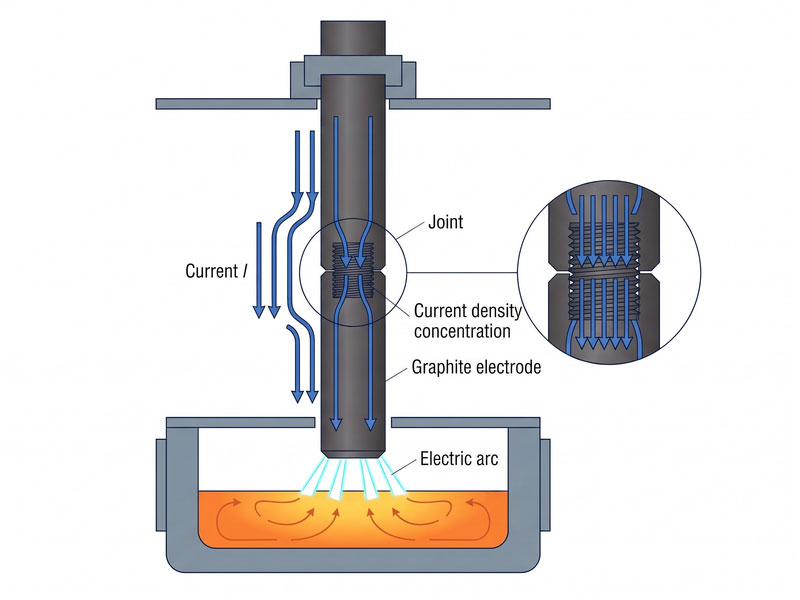
In an electric arc furnace environment, a graphite electrode joint takes on two loads simultaneously: current and force.
One is the current. It has to get from one electrode to the next across the joint. As in resistance welding, if there is more resistance at the joint than within the electrode body itself, the local spot of high resistance will begin to heat up. As it gets hotter, the rate of oxidation increases, damaging the thread form, increasing the contact resistance once again and producing a runaway effect. The result is not really a pull apart, but a burn together.
Two is the force. An entire column of a several-ton electrode will only be suspended off the ground by several threads on the end of one, the rest of the threads on either end being engaged in their mating threads. These few threads alone must sustain the alternate stress loading from electrode positioning adjustments, the tilt of the furnace when tapping, and alternating temperatures of furnace, electrode, and the immediate atmosphere and, thus they are susceptible to fatigue. The number one way it can happen is fatigue fracture.
Power Rating – Higher or Nothing
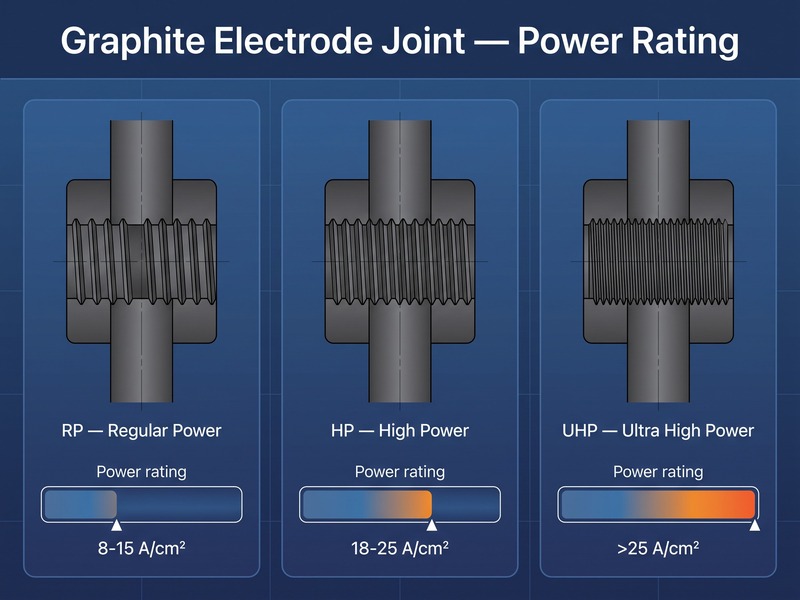
The RP, HP, and UHP ratings basically refer to current density. The RP, are conventionally smaller furnaces,; the HP is a standard moderate power load; the UHP is even denser, with much lower conductivity and higher strength – by over 50% more than for HP according to handbook values.
A common procurement practice is using an HP connector with a UHP electrode. When power is applied the temperature at that particular joint section becomes extremely elevated as is expected; they should fail in a number of furnace heats or thus. As was mentioned before the power of the joint must equal or exceed the rating of the electrode. The graphite electrode nipple specification may not deviate downwards.
Matching of Sizes
The size of the connector corresponds to the nominal size of the electrode body, but are not necessarily a one-to-one relationship. A certain sized 400 mm electrode could require a 215.9mm connector or maybe a 241.3mm size, if the standard is defined so.
In your inquiry process, before requesting a quote, always specify by giving the actual thread diameter for the tapped hole for the given electrode. Or obtain the specification number from your electrode supplier. Simply providing your electrode specification will not cut it: “My electrode is 400 mm” may bring you a shipment with the wrong product on arrival.
3TPI versus 4TPI
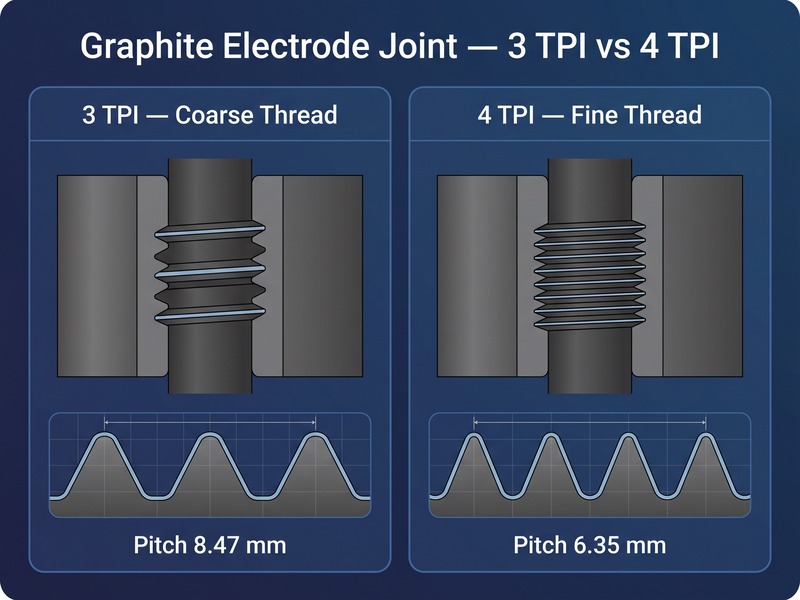
This is thread counting-coarse is three per inch (3 TPI), fine is four per inch (4 TPI). Coarse is for strength since large muscles operate at low speed, with higher torsional strength due to greater section of thread that is not engaged between the male and female. Since diameters of 18 inches are large they do carry three thread per inch TPI, Fine is higher accuracy positioning so more frequently specified for small and medium diameters.
Neither is interoperable so that they will literally destroy each other if one try to force the mating thread and cause damage and both be completely useless. Indicate whether it is three TPI or four TPI or both, specify left hand TPIL separately in order as if it were stated.
Tapered Thread
Taper provides a gradually expanding thread surface area, from point to where the contact becomes effective with tightening. It holds more effectively, is more stable under extreme temperature, and has better conductive contact area than parallel thread is necessary for. It needs extreme machining accuracy because, with too much taper, there is an inevitable air gap in arcing while at least a part of the tapered engagement of thread is tight. Ring and plug gages should be utilized for every delivered joint as part of inspection upon receipt.
Pre-connected Joints
When you purchase pre-connected joints the dealer or maker screws in each connector prior to shipment, which means that once it arrives, you can simply install the one remaining electrode using the factory installed thread adapter, in an almost maintenance-free manner and no difficult on- site operation is need. You would just remove them after the connectors are at the designated depth, if the specification requires for example to use 50% engaged section of the connector threads only. If they arrive loose and only had torques that they were originally assembled with you lose effectiveness.
Pre-connected joints would not automatically be exempt from torque and preload checking upon delivery at site.
Because long travel transportation might cause a reduction of initial torquing. Example if a bolt is torqued by machine to say 150 Newton meters; at your site after thousands of miles of transportation this could drop to as much as say 50-60 Newton-meters; and all of them will fail from wear on the thread and be “spun out.” The specification must have specific requirements.
Connecting and Lifting Plugs.
Connecting plugs go inside the connector body threads to effectively ‘fill up’ space where the graphite electrode nipple is, preventing the connector bolt and the threads in the body from unscrewing from each other during the operation of the furnace. New specification YB/T 6463-2026 states explicitly these will be required features; before this, that specification implied optional features.
Lifting plugs are designed as temporary temporary lifting devices; you simply don’t substitute a normal hex bolt for them.
The thread would be incorrect resulting in them becoming loose and the thousands of pound electrode column can damage everything and everyone.
Inspection on arrival
Supplier supplied quality inspection report of some kind or physicochemical testing certificate cannot make us sure that it will be OK. We must test every single part of our order for the specific parts that will directly fail. At the very least, we must look: Visually check for defects; none accepted.
Second, check threads using gage/Go- No-go for a part if it has threads: minimum 30 % samples shall be used.
If more than 2% of sample are defective, the entire lot should be rejected. Thirdly, send it to 3rd party lab to re-check the conductivity value(resistivity and density) for larger volumes or to avoid fraud. If it differs more than 5% then send it back.
Packing and Orders Management
The machined surfaces (the threads) on both electrode and connector are precisely fitted. Each connector should have a threaded connector protector screwed in after checking, and then packaged with impact-absorbing supports.
During packing be extremely careful that each connector is secured properly in place and threaded through the connector protector.
The outer package also must be made such that any damage to it while en transit does not affect the contents. When you contact suppliers for ordering of parts, four items must be clear, and included in your contract/PO:
1. Electrode diameter(in mm or in. And inches).
2. Current rating (in kA).
3. 3 or 4 thread (3 TPI, 4 TPI), and direction of screw thread(clockwise, left hand);
4. The relevant specification number and edition, e.g., YB/T 4255-2012.
5. Whether pre-connected or loose connector to be provided, torques specification if any specified in pre-connected
6. Whether connector bolt and Lifting bolt etc needs to be supplied for a lot; and the quantity of such extra pieces.
These six conditions must be written into the purchase contract, without exceptions to avoid interpretation later.
The importance of electrode connector cannot be overstated, yet it constitute a smaller fraction of the overall cost and size of an electrode. In the procurement process, only number of threads, physical diameter, length etc specification must not only guide decisions. Harder parameters: thread threadprecision, the bulk density and batch-traceability are crucial for the correct operation at field conditions.
Standards must not apply a looser rule for connectors than for electrodes.
Neither for on-site acceptance rules than that specified in any Quality Inspection report; apply the higher standard for any one given factor is not overkill if the risk of failure is so great.