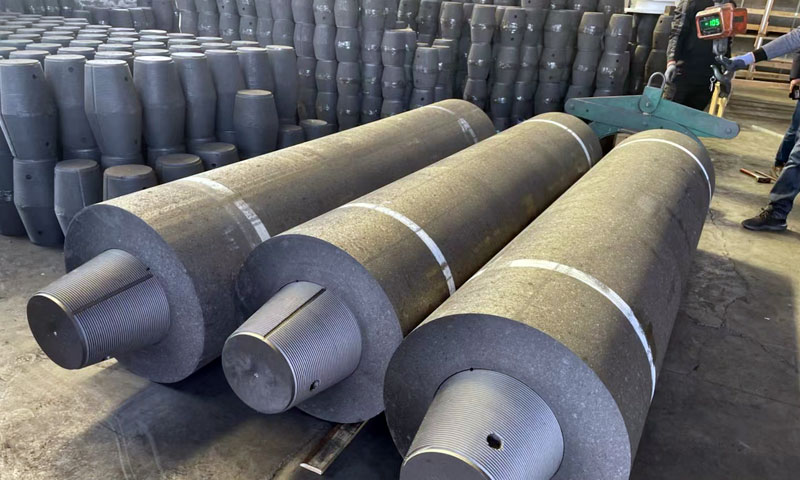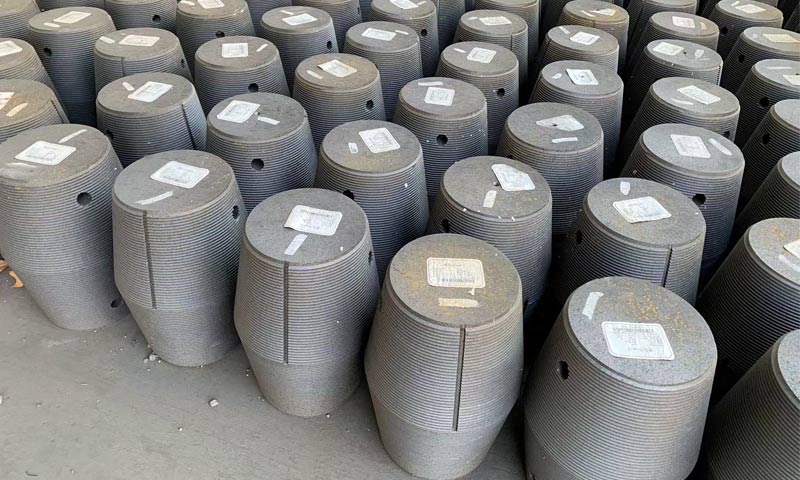
This article introduces the complete dimensional standards, physicochemical indicators, and selection parameters of 550mm 4 TPI graphite electrode nipple used under different smelting conditions. Purchase and use suggestions for 550mm 4 TPI connectors under different smelting conditions, which is beneficial to the purchasers and users who are interested.
Basic Technical Requirements of 550mm specification 4 TPI graphite electrode nipple
Core size parameters:
| Parameter | Value |
|---|---|
| Nominal size (mm) | 550 |
| Maximum outer diameter (mm) | 260.35 |
| Minimum outer diameter (mm) | 258.83 |
| Length (mm) | 356 |
| Thread specification | 4TPI (4 threads/inch) |
| Thread taper | 1:9.58 |
| Thread angle | 60° |
| Root radius (mm) | 1.27 |
Special design features of 4 TPI threads:
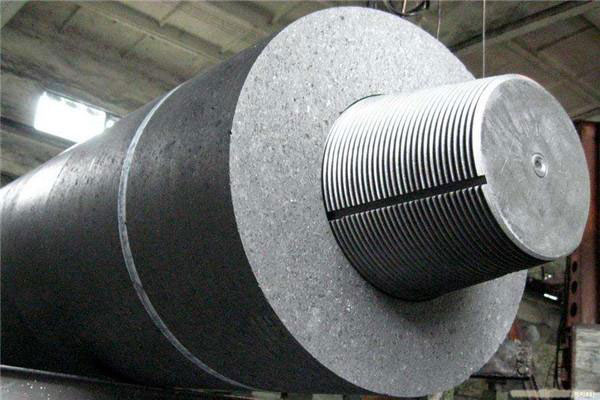
1. 4 threads per inch, larger pitch size, it is suitable for the quick docking of large diameter graphite electrodes.
2. Root radius of 4TPI thread graphite electrode nipple is larger (1.27mm), which can effectively distribute stress and eliminate stress concentration, so as to reduce the occurrence of fatigue cracks of thread joint.
3. 1:9.58 tapered thread ensures that the tight interlocking of joints, only in process to tighten until fully docked.
4. Complied with international standards of ISO10474;NEMACG1 and IEC60239.
Core physicochemical indexes of 550mm specification 4 TPI graphite electrode
It refers to industry standards of YB/T4090-2015;
| Parameter | Unit | Average value | Index requirement |
|---|---|---|---|
| Resistivity(m) | μΩ·m | 3.8~4.2 | ≤ 4.5 |
| Flexural strength | MPa | 23~26 | ≥ 20.0 |
| Young’s modulus | GPa | 13.0~16.0 | ≥ 18.0 |
| Apparent density | g/cm³ | 1.80~1.84 | ≥ 1.76 |
| Coefficient of thermal expansion | 10⁻⁶/℃ | 1.0~1.1 | ≤ 1.2 |
| Ash content | % | 0.12~0.18 | ≤ 0.2 |
1. Resistivity(m) (≤ 4.5 m): The resistivity should be much smaller than the resistivity of the matched 5.5 m electrode to avoid it getting red (too hot) at a higher-temperature contact resistance by compensating for contact surface’s extra resistor from the threads.
2. Flexural Strength (≥ 20.0 MPa): Flexural strength is the same as 2 times of the matched electrode (≈11Mpa) for bearing with the stress concentration at the connecter parts, i.e. Critical danger location in electrode assembly system under arc initiation, lifting&lowering electrodes as well as current impulse condition, which ensure to have electrode breakage Accidents and prolonging of electrode usage.
3. Young’s Modulus (≥ 18.0 GPa): Same as 20% increase than matching electrode.
4. Apparent Density (≥ 1.76 g/cm): High density indicates very low porosity of the joint, that means improve resistance on resistivity of joint;
5. Coefficient of Thermal Expansion (≤ 1.2 10/): CTF (coefficient of thermal expansion)of connector should smaller than that (1.5 10/)of matched electrode, which can make the electrode actively “press” the connector tighter by the increased current at higher temperature condition;
6. Ash Content (≤ 0.2%): Metal oxides contained in the ash act as the catalyst for the graphite’s high temperature oxidation of graphite electrode, so it indicates longer usage lifetime at higher temp for lower ash content.
The characteristics of 550mm 4 TPI graphite electrode nipple when used with ultrahigh current
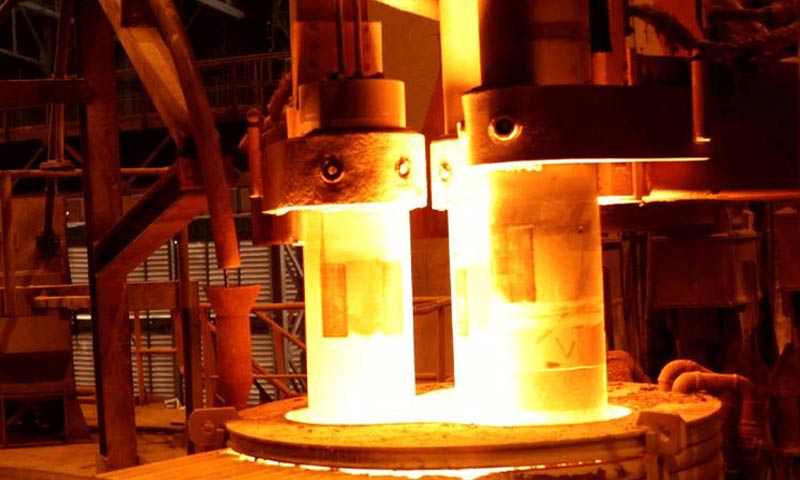
550mm 4TPI connector applies on connection within UHP (ultra-high power) graphite electrodes with diameter 550mm; The performance indicator which decide the electrical connection safe range with ultrahigh current as 45000-68000 A should be analyzed as following:
1. Connector Resistivity Characteristic (≤ 4.5 m): The 4 TPI connector’s body resistance should be lower than the 5.5 m of matched electrode for reducing more Joule energy on connector contact faces, which avoids the localized high temperature and increase connector’s risk on getting red when conducting the large current.
2. Connector Thermal Expansion Design (≤ 1.2 10/): The CTE design (1.2 10/) is lower than that (1.5 10/) of matched electrode, which allow the electrode actively “press” the connector when current higher increases under same tempo which results in tighter connection and stronger stress on joint contact.
3. Connector Flexural Strength Performance (≥ 20.0 MPa): Electrodynamic andThermal stresses will be centered at the joint, so it needs enough mechanical capacity for electrode breakage safety of electrode connection.
4. Thread’s Electro-current Bearing Capacity (tooth root radius 1.27mm): The 4TPI thread design has the large enough effective current carrying section of each screw tooth; preventing of over high density and localized overheating at center region of screwtooth caused by large current.
Selection advice for 550mm 4 TPI connector under different smelting condition
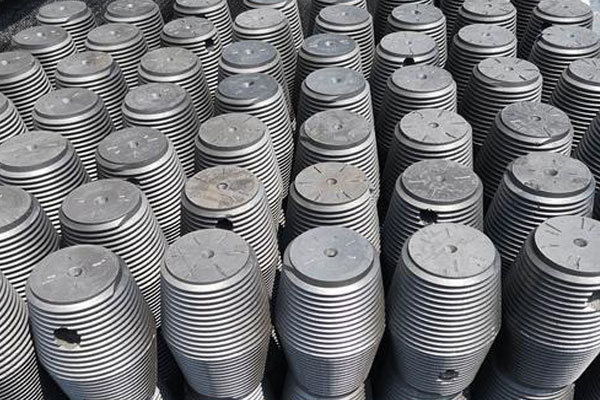
1. For Ultrahigh power EAF (Electric Arc Furnace): Focusing on thermo shock and impactful resistance. This kind of connectors should be high grade connectors and can show below indicators such as CTE≤ 1.0 10/, flexural strength ≥24MPa for a reliable selection. Compared to common joints, large root radius of 4TPI coarse threads can diminish tendency of thread breakage risk from thermo-shock.
2. For LF (Ladle Refining Furnace): Focusing on oxidation-resistance and stable usage. This smelting situation needs consistent heating. High end selection in these conditions should be that have ash content ≤ 0.2%(for a good oxidation resistant performance and longer lasting), and apparent density≥ 1.82g/cm 3. If the specification is not dense enough and ash content is high it can lead to the diameter narrowing of the screw socket under higher temperature at later stage operation, which eventually result “necking” failure.
3. For SAF (Submerged Arc Furnace) and Ferroalloy Smelting Furnace: Focusing onmechanical squeezing and corrosive resistance for electrodes and electrodes joints located submerged in the charge material. Here high density, multiply impregnation and intensified connectors should be choose. It shows very poor result by acid and alkali smelting medium when connector being squeezed by the melting substance or chemically corroded from Co or other gaseous materials under higher temperature.
Recommend of Procurement and Application
1. Please get standard test report for every piece of the electrode graphite nipple you are buying as per related GB / YB standards. Check if the connectors’ key indicators (resistivity, flexural strength etc.) can satisfy required index.
2. Before connecting the electrode, both electrode and connector should check out that their threads (taper, pitch) match precisely. It will avoid failure. It is recommened to purchase and use together with specialized manufacturer and electrodes factory.